Other Names for MSG
Other Names for MSG
Monosodium Glutamate (MSG), a salt of the amino acid, glutamic acid, was introduced in the food supply in the 1940's and has been the subject of lively debate ever since. In its pure form, monosodium glutamate is a white, crystalline powder with what may be described as a “pleasant” taste, but most people are familiar with it only as an invisible flavor enhancer and preservative in the foods they buy.
Foods with MSG
MSG is ubiquitous in processed foods, such as soups, luncheon meats, meat tenderizers, seasoning salt, salad dressings, snack foods, fast foods and frozen dinners.
MSG sensitivity can be a problem.
There is no doubt that at least some people have a sensitivity to monosodium glutamate, and need to be able to recognize it in its various forms in the food supply.
According to the FDA
Although the U.S. FDA considers MSG to be “generally recognized as safe,” there is a lot of controversy surrounding this popular food additive. Hundreds of studies have been done by various special interests, without a consensus opinion being reached, that would bridge the gap between those who believe it is safe and those who do not.
Not for babies
It should be noted that, according to FDA guidelines, MSG cannot be added to baby food, since it is considered unsafe for that age group.
Finding other names for MSG on food labels
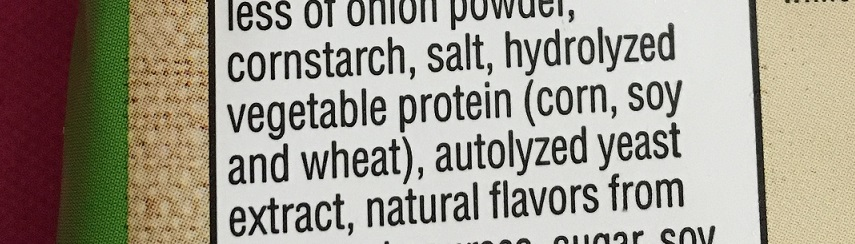
The FDA requires that food companies list MSG on the food label, if it is an ingredient in their product. Although this is one way to find the MSG in your food, it also may appear as a component of other ingredients including the following:
Click her for a printable copy of this list:
Textured protein
Autolyzed yeast
Yeast extract
Yeast food
Glutamate
Glutamic Acid
Autolyzed plant protein
Sodium caseinate
Calcium caseinate
Hydrolyzed protein
Hydrolyzed vegetable protein(HVP)
Hydrolyzed plant protein (HPP)
Soy protein extract
Natural flavors
Keep in mind that even foods that have a "MSG-free" claim on the label may contain these other forms.
Chinese Restaurant Syndrome
Since MSG is a common additive in Asian food, medical experts coined the term “Chinese Restaurant Syndrome” to describe the reactions that many people have after consuming this food additive. There is some evidence that this syndrome may be due to a Vitamin B6 deficiency, since this B vitamin is required to metabolize MSG. Some healthcare providers have found that supplementing the diet with Vitamin B6 can eliminate the symptoms of MSG sensitivity.
Owners of Chinese restuarants have become aware of this problem, and often will offer MSG free menu selections or have eliminated it from all of their dishes.
MSG not popular with some health experts
There are some health experts that take a very dim view of monosodium glutamate in our food supply, since they consider it an “excitotoxin,” which affects brain health, and a “poison” that is not only addictive but can also be linked to the increased
incidence of autism, diabetes, obesity and even ADHD.
Click here to go from Other Names for MSG page to Unhealthy Eating page.
Most Recent Articles
-
Healthy Eating Information
Jun 13, 23 08:40 PM
 Healthy eating information to help you make food choices that will improve your chances to live long and feel well.
 -
Healthy Eating Habits
May 22, 23 12:20 PM
 A list of healthy eating habits that will help you live longer and feel better while you're here.
 -
Fasting to Lose Weight
May 08, 23 10:32 AM
A discussion of fasting to lose weight in all its various forms.