Fatty Foods
Lab Rats and Human Ones
Fatty Foods
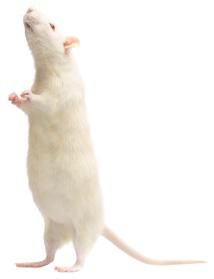

Recently, I received two unrelated bits of information from two completely different sources, but one so perfectly followed the other, that I knew I had to connect the dots. I heard the first bit of information, as I was preparing breakfast one day. “Those guys in the morning” on our local radio show were talking about a study they had heard that suggested that fatty foods are as addictive as cocaine!
They went on to describe a scenario where lab rats were given unlimited access to fatty foods (French fries came to my mind, but it could have been any type of junk food—high in fat) normally consumed by humans, described in the study as “cafeteria food.”
Reality bites
After forty days (in the wilderness?), the rats were given a choice between the fatty foods and normal, healthy rat food. The catch was that, if the now obese rodents chose the fatty foods, they would get an electric shock on or around their chubby little feet.
You probably guessed that they continued to go for the fatty foods, in spite of the shock, and the scientists determined that they were addicted; in other words, a change in their brain had occurred that compelled them to go for the food, regardless of the negative side effect of the pain from the electric shock.
These rats also compulsively overate, even to the extent of making faces when they were feeling discomfort from overeating, but still they soldiered on. (Reminds me of myself at Thanksgiving time!)
Which group are you in?
When I investigated this study further, I found that there were actually three groups of rats. The first group was the one described above. The second group was allowed some fatty foods, but not unlimited amounts and the third group was fed a proscribed diet of healthy rat food. In this way, the scientists could compare the chow hounds to the other two groups. The upshot was that the overfed, obese rats continued to overeat, regardless of the negative side effects.
Shocking news
Later in the week, as I was digesting this information, I received an email from, Sam, a visitor to our healthy eating website, in which, in the nature of an FYI, she sent me a link to the nutritional information from a popular restaurant—information that had only recently been revealed.
Here is a brief portion of that information:
| Item | Calories | Saturated Fat (g) | Cholesterol (mg) | Sodium (mg) |
|---|---|---|---|---|
| Recommended Daily Intake | Varies | 20 | 300 | 2300 |
| Beef Back Ribs | 4301 | 156 | 750 | 7623 |
| Black Tie Chicken Pasta | 3773 | 134 | 768 | 4638 |
| Appetizer Combo | 3517 | 61 | 415 | 7501 |
| Chicken and Broccoli Alfredo | 3125 | 123 | 731 | 2756 |
| Chocolate Motherlode Cake | 2723 | 55 | 275 | 1459 |
| Citrus Chicken Salad (Charbroiled) | 2520 | 33 | 199 | 1776 |
Source: snippets.com
To say these numbers shocked me, would be an understatement! Most people do not consider that when they order a simple meal of ribs, pasta or salad, with no side dishes, that they may be getting enough calories and fat for a family of six! When you take into account that eating out has become the norm and not the occasional experience it once was, it’s not surprising that we are finding our girths expanding as our health recedes!
Connecting the dots
So how is this appalling revelation connected to the voracious rodents mentioned above? Think about it! When we eat large amounts of calorie, fat and sodium laden food, we gain weight! Then when we try to do something about it, we find that we are having a difficult time forgoing the calories and fat, and in spite of the “shock” of that number on the scale, and the “pain” of social and physical distress, we continue to eat more than we need.
Rat brains and human ones
I understand that we are not rats; we are human beings. Nevertheless, if rats can be affected in this way, it stands to reason that we may have a similar response. This certainly seems to be borne out with the correlation between the increased availability and consumption of fatty foods and the upsurge of obesity in general and morbid obesity in particular.
In a way, we have become “human lab rats,” allowing ourselves to be managed by the keepers of the food supply. Of course, it’s partly our own fault because, unlike rats, we are free to eat what we like. We can even vote with our food dollars for the kind of food that will keep us healthy.
Find out for yourself
The difference is that, unless they are from “The Secret of NIMH”, rats cannot do research or educate themselves about the foods they eat.
Fortunately, people can.
Although you may not dine at the particular restaurant whose nutritional data is mentioned above, you can take a minute to look up the information about the restaurants you do frequent, and then adjust your habits accordingly. You can read labels and pay attention to the foods you buy. As this study suggests, it is very likely that you can protect yourself from becoming addicted by making informed food choices.
On the other hand, if you already find yourself in the obese or morbidly obese category, you now know that overcoming what may be an addiction and changing your brain chemistry to a healthier one, will not be easy. It’s not just about willpower when your brain is urging you to eat. As with any addiction, it will take time and support, but you can do it!
Healthy eating information may be one of your most valuable weapons in the fight.
Of course, if you are already addicted to fatty foods, you may need to skip those things, for now, and maybe forever, but the trade off in how you look and feel will be well worth it.
The Silver Lining
Earlier this week, when I posted a note about the fatty foods rat experiment on Spark People.com, a very astute fellow blogger pointed out that she was encouraged by the fact that the middle group, who had only limited exposure to the so-called “cafeteria food,” actually did okay when it came to the final test. In other words, you probably won’t become addicted by that occasional high-calorie restaurant meal or piece of birthday cake. You just can’t make a habit of eating that way.
Pity the rat
After hearing about this study, I had a moment of pathos for those poor little rodents, partying one minute, and getting punished the next for the exact same behavior. I suppose that’s life when you’re a lab rat, but I refuse to be a human one and I hope you will, too.
Eat and be healthy with my warmest regards,

Click here to go from Fatty Foods page to Healthy Eating Fats page.
Most Recent Articles
-
Healthy Eating Information
Jun 13, 23 08:40 PM
 Healthy eating information to help you make food choices that will improve your chances to live long and feel well.
 -
Healthy Eating Habits
May 22, 23 12:20 PM
 A list of healthy eating habits that will help you live longer and feel better while you're here.
 -
Fasting to Lose Weight
May 08, 23 10:32 AM
A discussion of fasting to lose weight in all its various forms.