Cancer Prevention and Healthy Eating
Cancer Prevention
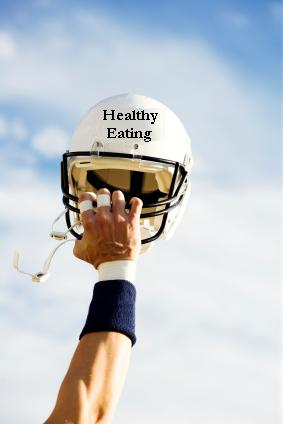
The formula for a winning season
During the football season we are anxious to see how our favorite teams will perform—both on Offense and on Defense. As you know, if we have a good Offense, we will score lots of points, and if we have a good Defense, we will keep the other team from scoring. This adds up to the perfect formula for winning the game.
However, if we have either a good Offense or a good Defense, but not both, we will probably only be victorious in some of our games. It is only by maintaining reliable strategies on both sides of the ball--Offensively and Defensively--that we will likely achieve what we really want - a winning season.
Even if you are not a gridiron enthusiast, the same principle can be applied to cancer prevention - one of the most dreaded diseases we face. I have already lost a number of family and friends to this killer, and I want the rest of my team to have the best healthy eating strategies to win the cancer prevention contest--and win big.
Cancer Prevention
There are two major eating strategies for cancer prevention. First, you need to develop a good Offense by eating foods that have protective qualities against cancer. Second, you need to have a good Defense by limiting or avoiding foods that seem to promote this dreaded disease.
The Offense – Eat these foods
-Protect your body with a strong and sturdy Offensive Line made up of colorful fruits and vegetables (be sure to wash them!), whole grains and legumes. These foods are loaded with fiber, nutrients and phytochemicals, which have been shown to protect your body against the substances that cause cancer.
-Check out some of the super foods, like blueberries, broccoli and turmeric, and include them regularly in your diet. You may also want to increase your intake of Omega-3 fats, found in cold-water fish and flaxseed, since these fats seem to have a protective effect.
-It’s important for you to remember that healthy eating strategies protect your body in the same way that a tough offensive line protects the quarterback.
The Defense – Avoid these foods
-Avoid or limit foods that seem to cause or promote cancer formation. These include fried foods, grilled foods, trans-fats and heavily smoked foods. In addition, there are some health experts that suggest that you avoid excessive intake of processed sugars, red meat and high-fat foods. Others suggest that you try to avoid foods that have been adulterated by dyes, artificial flavorings, hormones and other potentially harmful chemicals.
-Just like with a football game, you want to begin implementing these healthy eating strategies at the beginning of the game. No team wants their Offense to be fighting to score points in the last two minutes of the game. Instead, they want them to come out fighting and score on the first possession.
-In the same way, no team wants their Defense to cool their heels until their opponent is in the red zone, since their job gets tougher and has a greater chance of failure the closer they get to the other team's end zone.
By choosing to limit or eliminate foods that aid in cancer formation and promote its growth, you are protecting your body in the same way that a solid Defense protects the end zone.
Don't wait. Start your healthy eating program today.
We all know that nutrition is not the only factor associated with cancer risk, but it is one of the few factors that you can control. A football team can’t control the weather, or injuries, or bad calls, just like you can’t control heredity, environmental factors or the food supply. But each small change you make in your diet, both on Offense and on Defense will go a long way toward helping you have a winning season, and just maybe you will send cancer back to the locker room in defeat.

Note on Cancer Prevention:
When encouraging people to eat healthy, I often hear the argument that grandma or grandpa ate a certain way—that might now seem unhealthy—and they lived to a ripe old age. The problem with this thinking is that, just as football isn't the same game today that it was 50 years ago, cancer issues are not the same either.
Our grandparents grew up in an environment that was less toxic, less stressful and with a food and water supply that was entirely more wholesome than what we experience today.
You shouldn't compare the record of a football player that played in the early days of the sport—before high-tech training methods, recovery aids and medicines—to today’s players. In the same way, it's not terribly useful to compare how your grandparents ate to what makes a healthy eating lifestyle today.
I hope you will take these tips for cancer prevention to heart.
Eat and be healthy with my warmest regards,

Click here to go from Cancer Prevention page to phytonutrients page.
Most Recent Articles
-
Healthy Eating Information
Jun 13, 23 08:40 PM
 Healthy eating information to help you make food choices that will improve your chances to live long and feel well.
 -
Healthy Eating Habits
May 22, 23 12:20 PM
 A list of healthy eating habits that will help you live longer and feel better while you're here.
 -
Fasting to Lose Weight
May 08, 23 10:32 AM
A discussion of fasting to lose weight in all its various forms.