Healthy Eating Vitamins
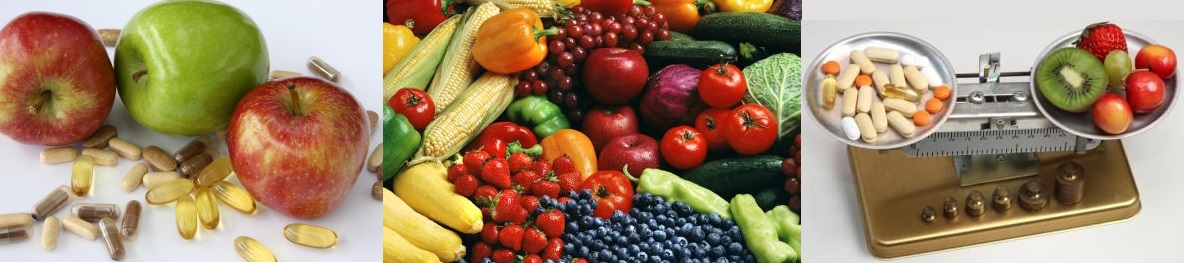
Healthy Eating Vitamins
The Science
Vitamins are organic substances, required by your body to perform specific tasks that promote good health. Unlike the energy nutrients, protein, fats and carbohydrates, vitamins do not have calories and are single molecules that are not linked together.
Vitamins must be obtained from your diet and are, as the name suggests, “vital” for good health. Relatively small amounts are needed to achieve a healthy eating lifestyle.
Two categories
Scientists generally divide vitamins into two categories—water-soluble and fat-soluble.The water-soluble vitamins are the B Vitamins and Vitamin C. The fat-soluble vitamins are Vitamin A, Vitamin D, Vitamin E and Vitamin K. For specific information on each of these vitamins, please click on the links below.
Water-soluble
Thiamin... Riboflavin... Niacin… Biotin... Pantothenic Acid...
Vitamin B6... Folic Acid... Vitamin B12... Vitamin C…
Water-soluble vitamins, as the name suggests, can be dissolved in water, so they are absorbed directly into your blood stream. They travel freely though the blood to the sites in your body where they are needed and any excess can be removed by the kidneys and excreted through the urine.
Fat-soluble
Vitamin A… Vitamin D… Vitamin E… Vitamin K…
Fat-soluble vitamins, because they cannot dissolve in water, must be absorbed through the lymph and then be transported in the blood by protein carriers. Any excess of the fat-soluble vitamins is stored in the fat storage areas of your body.
Vitamin Precursors
Some vitamins are available from your food in the form of a “precursor.” This is an inactive form of the vitamin that can be converted by your body to the active form.An example of this is the beta-carotene found in carrots and other yellow, orange and dark green, leafy vegetables. If needed, your body can convert beta-carotene to Vitamin A.
Vitamins can be destroyed
Vitamins in foods can be destroyed by light, heat and oxygen. Storage methods and food preparation techniques will affect the amount of vitamins retained by the foods. To minimize this problem, refrigerate produce in airtight containers, and during preparation, steam or cook vegetables lightly, avoiding high temperatures and extended cooking times whenever possible.
Fun Fact about Healthy Eating Vitamins: When you add fresh or frozen vegetables to soup or stew, the vitamins go into the broth of the soup rather than being washed down the drain, as is the case when you cook vegetables in water and throw away the cooking water.
What about choline?
There is a nitrogen-containing compound called choline that some nutritionists include as a vitamin.
Click here for more information about choline.
The Scoop about healthy eating vitamins
From the time you were a kid and your mom gave you those cute vitamins shaped like cartoon characters, you probably realized that you need vitamins to be healthy. In fact, when the subject of vitamins comes up, many people think of pills, not food.
It is generally agreed that the best way to get vitamins in your diet is from the foods you eat. Even if you take a vitamin supplement, the idea is to do just that—supplement—the foods in your diet, not replace them.
The vitamins in food seem to be more accessible to your body, than vitamins from pills because they are not isolated, but surrounded by other substances that work with them to keep you healthy. This is not to say you should not take a vitamin supplement; many health experts recommend that you do. However, do not make the mistake of thinking that a pill can replace nutritious whole foods in your diet.
Vitamins are found in varying degrees in all of the food groups.
Fruits… Vegetables… Cereals… Grains… Meat and other Protein foods… Dairy products… Fats and oils…
Fun Fact about Healthy Eating Vitamins: When a baby eats a lot of yellow vegetables such as squash or sweet potatoes, which they generally like because they are sweeter, their skin, especially on the soles of their feet, can actually take on an orange cast from the beta-carotene in these vegetables.
Fat-soluble or water-soluble vitamins differ in how they are handled in your body.
The significance of this to you is that since fat-soluble vitamins can be stored for later use, you probably don’t need to worry as much about a deficiency. However, they also can be more toxic because of the very fact that your body does not excrete the excess.
Water-soluble vitamins must be obtained almost daily, since your body will excrete the excess each day. By the same token, they are less likely to become toxic, although it is still possible if you take very large doses.
In the case of vitamins that can be obtained by your body from precursors or pre-vitamins such as beta-carotene, your body can convert what is needed and the rest of the precursor can be excreted. In this way, there is also less chance of toxicity.
Enriched and fortified
Many products that we eat are enriched or fortified with vitamins. That is, vitamins are added to the food either to replace vitamins removed in processing or to make the food more nutritious.
Most milk has Vitamin A and/or D added. White flour is enriched with B vitamins, as are many white flour products, such as cereals, bread and pasta. Many juice drinks are fortified with Vitamin C.
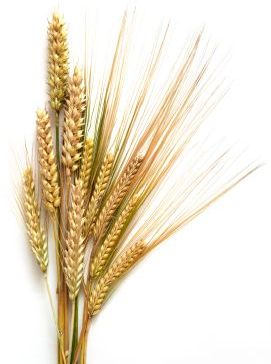
Fun Fact about Healthy Eating Vitamins:
When wheat kernels are processed to make white flour, the bran and the germ are removed, leaving only the white center (endosperm).
Then, since most of the vitamins (and minerals) are in the parts that were removed, the food company will fortify or add back in, the vitamins and minerals that were removed. (The wheat germ and bran are often sold as cattle food, or put in little jars and sold as “health food.”)
Unfortunately, the processed flour is still less nutritious than the whole grain, because not all of the missing nutrients, such as fiber, are replaced. What were they thinking when they came up with this idea?
How much of do I need?
The Science of healthy eating vitamins
The RDA (Recommended Dietary Allowance) for vitamins varies based on age and gender, with a separate recommendation for pregnant and lactating women. It is difficult to say exactly how much of a vitamin is needed because there are so many variables besides the obvious ones of age and gender.
Each of us is a unique individual, and the availability of vitamins from the foods we eat, or even from a vitamin pill will vary based on individual factors. The amount we absorb can be affected by our overall health and nutritional status. It can also be affected by how the food is stored and prepared and by foods that we eat at the same time. The RDA tries to take all of these factors into account, but it is still, at best, a general guideline.
--Caveat for Healthy Eating Vitamins: If you eat a diet that is too high in fiber, the food will literally race through your digestive system, not allowing much time for absorption of the vitamins and other nutrients you need.
For the specific RDA for each vitamin, please click on the link for that vitamin above.
The Scoop about healthy eating vitamins
While the RDA for vitamins may be useful in a scientific sense, or if you are comparing labels on the foods or vitamin pills you purchase, the best way to insure that you are getting enough vitamins, is to eat a variety of nutritious whole foods. Selecting foods from all of the food groups will help ensure that you have all of your bases covered with regard to vitamins.
Having said that, many health experts recommend that you take a daily multi-vitamin (and mineral) supplement just to be sure that you are getting enough of these nutrients.
--Caveat for Healthy Eating Vitamins: As with anything, you can get too much of a good thing. Don’t overdue on vitamin supplements. Your body can handle excess to a point, but beyond that, vitamins can become toxic. Vitamin toxicity is not likely to occur if you get your vitamins from food.
Why do I need vitamins?
You need vitamins to be healthy and to feel good. Vitamins, together with the other nutrients, Protein, Carbohydrates, Fats, Minerals and Water, help keep your body working properly. Each vitamin has a significant role to play in your total good health.
Healthy Eating Vitamins - What if I don’t get enough?
-Without enough Vitamin A, your skin and vision will suffer.
-Without sufficient amounts of the B vitamins, you will not have the energy to do the things you want to do each day.
-If you are missing Vitamin C, your gums will bleed and your wounds will not heal.
-A lack of Vitamin D will make your bones frail, and a lack of Vitamin D has recently been linked to some kinds of cancer.
-If you don’t get enough Vitamin E, you may feel tired, and studies suggest that you will be more susceptible to certain diseases.
-Without sufficient amounts of Vitamin K, your blood will not clot and your bones will be frail.
-These are some of the things we know about the need for vitamins, but there are probably other important roles of vitamins that we have yet to discover.
Can I get too much of these vitamins?
All nutrients, even water, can be toxic if you overdo. In the case of vitamins, because of supplementation with pills, there is a greater potential for getting too much. If you get your vitamins from food, toxicity is very rare. If you supplement with vitamin pills, be aware of the dose and realize that vitamins can become toxic if taken in mega doses.
The Secret
Eat a variety of fresh, whole foods. Store vegetables and fruits properly. If you cook vegetables, cook them lightly whenever possible. Eat foods from all of the food groups daily. Supplement with a good multivitamin from natural sources to fill in the gaps.
It’s as simple as that!
Click here to go from Healthy Eating Vitamins back to Healthy Eating Support home page.
Most Recent Articles
-
Healthy Eating Information
Jun 13, 23 08:40 PM
 Healthy eating information to help you make food choices that will improve your chances to live long and feel well.
 -
Healthy Eating Habits
May 22, 23 12:20 PM
 A list of healthy eating habits that will help you live longer and feel better while you're here.
 -
Fasting to Lose Weight
May 08, 23 10:32 AM
A discussion of fasting to lose weight in all its various forms.