Protein Deficiency
Protein Deficiency
Proteins are organic compounds made up of building blocks called “amino acids.” There are about 20 common amino acids. Nine of them are considered “essential” because the body cannot synthesize them, and therefore, they must be provided by the food you eat.
If your diet does not contain enough of these essential amino acids, your health will suffer.
Quality of protein
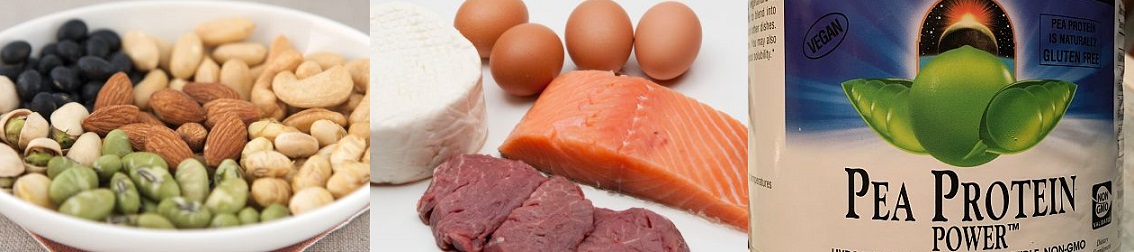
Foods that contain all of the essential amino acids are called “complete proteins.” These complete protein foods are usually animal foods. Plant foods do not, as a rule, have complete proteins, but by eating combinations of plant foods, called “complementary proteins, ” you can make a complete protein.
Click here for more information on complementary proteins.
Seven major functions of protein
1. Building material for body tissues such as skin, bones, tendons, muscles, hair, nails and organs
2. Maintain proper fluid balance in and out of the cells
3. Promote proper pH of the body by buffering fluids
4. Major component of hormones, enzymes and antibodies
5. Needed for blood clotting
6. Acts as transporters carrying nutrients to all parts of the body
7. Provide energy and glucose for the brain when carbohydrates are unavailable for that purpose.
Not enough protein
Severe protein deficiency is most often associated with starvation and malnutrition and is a major cause for concern in developing countries, especially among children. Thousands of children die every day from malnutrition, which includes inadequate protein intake.
However, deficiency can also occur even in developed countries, where it is usually associated with those in extreme poverty, the elderly, or those suffering with eating disorders, such as anorexia nervosa. It can also affect those addicted to drugs or alcohol who may use their resources on the addictions instead of food or suffer from poor appetite.
Those most likely to be deficient in protein:
-Infants and children in underdeveloped countries
-Those around the world who live in extreme poverty
-The elderly who live by themselves
-Those with eating disorders such as anorexia nervosa, or who simply don’t eat enough
-Those addicted to drugs or alcohol, especially when combined with low income
-Those pursuing a low-protein diet for whatever reason, including fads or weight loss
-Those with tuberculosis or AIDS
-Those whose main diet is low in protein due to poor food choices such as eating too much junk food
Interesting Fact about Protein Deficiency: Recent studies have shown that post-menopausal women who pursue a low calorie diet to lose weight, will also lose muscle strength. This is because the combination of age and protein deficiency causes muscle wasting in addition to fat loss.
One way to address this issue is to add several servings of a protein supplement to your low calorie diet. This will supply needed protein, as well as satiety, without adding too many calories for effective weight loss. Also, adding some regular weight-bearing exercise will help keep your muscles and bones strong.
Effects of not enough protein
Protein is a vital nutrient for a good health and well being. Depending on the level of deficiency, a person who does not eat enough protein may experience any of the following symptoms related to the functions of protein listed above:
|
Anemia Anxiety Apathy Dry skin or skin lesions Edema (swelling) Fatty liver Fever Heart attack due to wasting of heart muscle Inability to maintain body temperature Irritability |
Lack of growth in children Loss of appetite Loss, thinning or discoloration of hair Malnutrition due to poor absorption of nutrients Muscle wasting Poor appetite Reproductive problems Slow development in children Susceptibility to infections and disease Weight loss |
Kwashiorkor
One condition associated with not enough protein is kwashiorkor, which is occurs with sudden malnutrition, such as what happens when a mother weans one child to begin feeding another. In underdeveloped countries or poverty stricken areas of developed countries, the weaned child will often receive a far less adequate diet than when it was feeding on the nutrient-dense breast milk, resulting in protein deficiency.
Kwashiorkor is often the culprit in those heart-wrenching photos of children with distended bellies that are used to encourage donations to world hunger relief organizations. The disruption of the child’s fluid balance and a susceptibility to bacterial growth and infections and infestations, due to protein deficiency causes the swollen belly. Their liver may also be affected since they lack the protein transporters to carry the lipids out of the liver and to make the enzymes needed for liver detoxification.
Marasmus
Protein deficiency over a long period of time may result in a condition called Marasmus. It is most common in infants and means that the child is literally starving to death. The hallmark of a child with marasmus is that they have very little flesh and spindly arms and legs. Due to a lack of protein, the muscles literally waste away, including the heart muscle, causing weakness.
Long term
If the deficiency is not addressed, the child will not develop properly, since it will lack the building materials needed for growth along with the enzymes and hormones needed for so many body processes. Protein deficiency may be self-perpetuating since eventually, the body will be unable to digest and absorb even the protein it does receive.
Timely intervention
The effects of protein deficiency can be reversed if intervention occurs before too much damage has been done. In severe cases, it requires careful introduction of protein into the diet, in small amounts at first, until the patient is recovered enough to handle larger servings.
Click here to go from Protein Deficiency page to Nutrition Facts page.
Most Recent Articles
-
Healthy Eating Information
Jun 13, 23 08:40 PM
 Healthy eating information to help you make food choices that will improve your chances to live long and feel well.
 -
Healthy Eating Habits
May 22, 23 12:20 PM
 A list of healthy eating habits that will help you live longer and feel better while you're here.
 -
Fasting to Lose Weight
May 08, 23 10:32 AM
A discussion of fasting to lose weight in all its various forms.