Vitamin E Sources and Functions
Vitamin E Sources and Functions
All of the vitamins work together to help keep you feeling well, but here is an overview of the role of Vitamin E, a fat-soluble vitamin, in your good health.
Deficiency rare
Vitamin E deficiency is not common and generally accompanies diseases where fat is not properly absorbed, since it is a fat-soluble vitamin, such as cystic fibrosis. Premature infants are also vulnerable to Vitamin E deficiency.
In general, people who live in developed countries like the United States get enough Vitamin E. However, those suffering from eating disorders or living in poverty may not be eating enough food to get sufficient Vitamin E in their diet.
| What it does | Protects the body from oxidative stress as an anti-oxidant; helps maintain integrity of cell membranes |
| Daily needs | [Infants*: 4-5 mg or 6-7.5 IU] [Children†: 6-15 mg or 9-22.5 IU] [Men: 15 mg or 22.5 IU ] [Women: 15 mg or 22.5 IU] [Pregnant: 15mg or 22.5 IU] [Lactating: 19 mg or 28.5 IU] |
| Not enough | Poor balance, Muscle weakness, vision problems, speech problems |
| Too Much | (Upper limit for adults established by the USDA is 1,000 mg or 1500 IU) |
| Foods | Nuts, Whole or Enriched Grain Products, Meat-especially Pork, Legumes, Winter Squash, Vegetable Oils, Avocado, Dark Green Leafy Vegetables |
*The lower value is for infants up to 6 mos.,higher value is for infants up to a year old.
† The first value is for children 1-3 with the amount increasing until age 18.
Destroyed by Heat
Vitamin E is easily destroyed by heat so, Vitamin E rich foods should be cooked lightly or eaten raw whenever possible.
Found in a variety of foods
Although Vitamin E is present in a variety of foods, some of the best sources of Vitamin E are as follows:
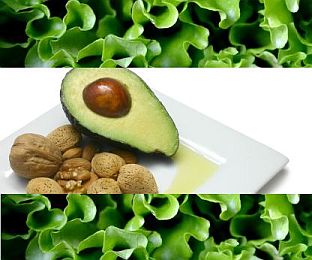
Olive oil… Safflower oil… Canola oil… Sunflower oil… Almonds… Peanuts… Hazelnuts… Spinach… Romaine… Avocado… Wheat germ… Whole Grains… Liver… Eggs…
Vitamin E sources and function in the news
Vitamin E is a popular topic in the news because its antioxidant properties make it a player in the prevention of diseases such as cancers and coronary artery disease. Vitamin E has been shown to enhance the immune system, particularly in the elderly. Studies are ongoing to determine the effect of Vitamin D on diseases such as Type II Diabetes and Alzheimer’s Disease.
Fun Fact about Vitamin E Sources and Functions: If you make a salad with dark greens (like romaine and spinach), sprinkled with sliced almonds, garnished with some fresh avocado chunks, and topped off with a bit of oil and vinegar or some other good quality dressing, you will have a veritable feast of Vitamin E (plus a number of other nutrients!) Add some colorful carrots and tomatoes and it will delight the eye as well as the palate.
Be careful with supplements when considering Vitamin E sources.
Many health experts recommend taking a daily Vitamin E supplement of 400-800 IU, depending on who is making the suggestion. However, as with all nutrients, it is better to get your Vitamin E from fresh, whole foods, if possible. In addition, take the supplement with a meal that contains some fat to help with the absorption of the Vitamin E from the supplement.
Vitamin E is a fat-soluble vitamin, and therefore, it is stored in the fat in your body. The good news is that this means that you have a continuing supply of Vitamin E, even if your diet fails you. Nevertheless, you should know that all of the fat-soluble vitamins can become toxic in large doses, because the excess may not be excreted. It goes without saying that this toxicity is less likely to occur if you get your Vitamin E from foods.
If you decide to take a supplement, be aware of the amount of Vitamin E it contains.
If you choose to take a Vitamin E supplement, be sure to read the label to see in what form the Vitamin E is found. Natural Vitamin E from mixed tocopherols is the best. If that is not available, d-tocopherol is better than dl-tocopherol, which is a synthetic form that is not as bio-available to the body.
Some medications may interfere with the absorption of Vitamin E and the effectiveness of others may be affected by Vitamin E supplementation. If you take medication, you should talk to your doctor and pharmacist about possible interactions.
Click here to go from Vitamin E Sources and Functions page to Healthy Fats page.
Most Recent Articles
-
Healthy Eating Information
Jun 13, 23 08:40 PM
 Healthy eating information to help you make food choices that will improve your chances to live long and feel well.
 -
Healthy Eating Habits
May 22, 23 12:20 PM
 A list of healthy eating habits that will help you live longer and feel better while you're here.
 -
Fasting to Lose Weight
May 08, 23 10:32 AM
A discussion of fasting to lose weight in all its various forms.