Choline
Choline is a nitrogen-containing compound that can be synthesized by the body from the amino acid, methionine, with help from folic acid and niacin. Although your body can make its own supply, it appears that you need to eat healthy foods that contain this nutrient in order to get enough for good health.
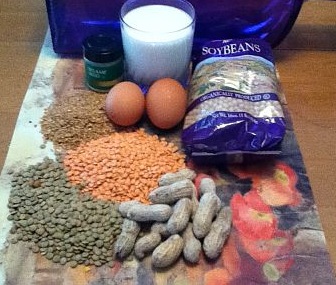
| What it does | Required for making acetylcholine—a neurotransmitter (messenger); Forms part of lecithin—a phospholipid which helps emulsify fats; Helps prevent build-up of the harmful compound, homocysteine, in blood |
| Daily needs (AI)# | [Infants: 125-150 mg] [†Children: 200-400 mg] [Men: 550 mg] [Women: 425mg] [Pregnant: 450 mg] [Lactating: 550 mg] |
| Not enough | Liver problems; Heart disease; Chronic inflammation |
| Too Much | Sweating; Unusual body odor; Failure to grow; Liver damage; Low blood pressure |
| Foods | Egg yolks, Milk, Liver, Peanuts, Foods containing Lecithin, Soybeans, Flaxseed, Lentils, Sesame Seeds |
† Smaller amount for younger children, with increasing amount as children age. # Adequate Intake (AI) is the average amount a healthy person consumes; no RDA established.
Is it a vitamin?
Choline is rarely included in a list of essential nutrients, and some experts resist calling it a “vitamin.” This is partly because the body can produce it on its own and partly because deficiency is rare.
Important for fetal development
Getting enough of this vitamin is important for pregnant moms, because during a baby’s development, it is necessary for the proper development of the nervous system.
Less inflammation
There is some very good research that suggests that adequate levels of choline in your diet will lessen your chances of suffering from chronic inflammation. This is significant because we are finding that most diseases, including heart disease, Diabetes, and Alzheimer’s disease are correlated with high levels of inflammation in the body.
Upper Level
The Upper Level for this nutrient has been established at 3500 mg/day.
What is lecithin?
Lecithin is the most commonly known emulsifier, and is found naturally in foods such as eggs, wheat germ, liver and soybeans. It is also added to many processed foods, such as mayonnaise, since it allows oil to mix with other liquids.
It has been popular as a diet food, but since the liver can make all of the lecithin it needs, it is questionable whether taking lecithin as a supplement is really useful. In addition, there can be some uncomfortable side effects from taking large doses, such as digestive distress.
Click here to go from Choline page to Recipe Lentil Soup page.
Most Recent Articles
-
Healthy Eating Information
Jun 13, 23 08:40 PM
 Healthy eating information to help you make food choices that will improve your chances to live long and feel well.
 -
Healthy Eating Habits
May 22, 23 12:20 PM
 A list of healthy eating habits that will help you live longer and feel better while you're here.
 -
Fasting to Lose Weight
May 08, 23 10:32 AM
A discussion of fasting to lose weight in all its various forms.